
Bone Inlay Furniture vs Mother of Pearl Furniture
The History of Inlay Craft in Rajasthan
The story of inlay furniture in Rajasthan begins in the Mughal era, roughly between the 16th and 18th centuries, when the imperial courts of Delhi, Agra, and Lahore were commissioning the most elaborate decorative arts the subcontinent had ever seen. Craftsmen many brought from Persia, Central Asia, and the Arab world carried with them traditions of pietra dura (stone inlay), marquetry, and nacre work that had flourished across Islamic art for centuries. These techniques found fertile ground in Rajasthan, where local artisan communities known as karigar adapted and transformed them using the materials available in their own landscape.
Bone inlay developed as a distinctly Rajasthani innovation. Rather than the precious stones and exotic woods used in Mughal court furniture, artisans in cities like Jodhpur, Barmer, and Shekhawati turned to camel bone abundantly available in the desert economy of western Rajasthan as their inlay material. The result was a democratic luxury: furniture of genuine intricacy and beauty that could be produced in larger quantities and sold to merchants and wealthy landowners, not only to royalty. Over generations, the craft traditions concentrated in specific communities. In Jodhpur, bone inlay became embedded in the identity of certain artisan families who passed their skills from father to son, mother to daughter, preserving the hand techniques across hundreds of years.
Mother of pearl inlay has a parallel but distinct history in the region. Shell inlay was common across the Islamic world from Moroccan furniture to Syrian boxes — and its entry into Rajasthani craft is associated with trade routes connecting the region to the Persian Gulf and, later, to the coastal shell markets of Gujarat and Kerala. The iridescent quality of nacre was prized precisely because it produced an effect that no pigment or paint could replicate: a surface that seemed to generate its own light. In Rajasthan, MOP inlay was considered the more prestigious of the two traditions reserved for finer commissions and wealthier patrons — a reputation still reflected in its relative price today.
Today, both crafts are recognised under India’s Geographical Indication (GI) tagging system as heritage products of Rajasthan. Jodhpur in particular has emerged as the global capital of handcrafted inlay furniture, with workshops producing pieces shipped to interior designers, boutique hotels, and luxury homes on every continent. The craft has evolved new pattern designs, new colour palettes, collaborations with international designers but the hand techniques that define it remain unchanged from those practised four centuries ago
Difference between Bone Inlay Furniture & Mother of Pearl Furniture
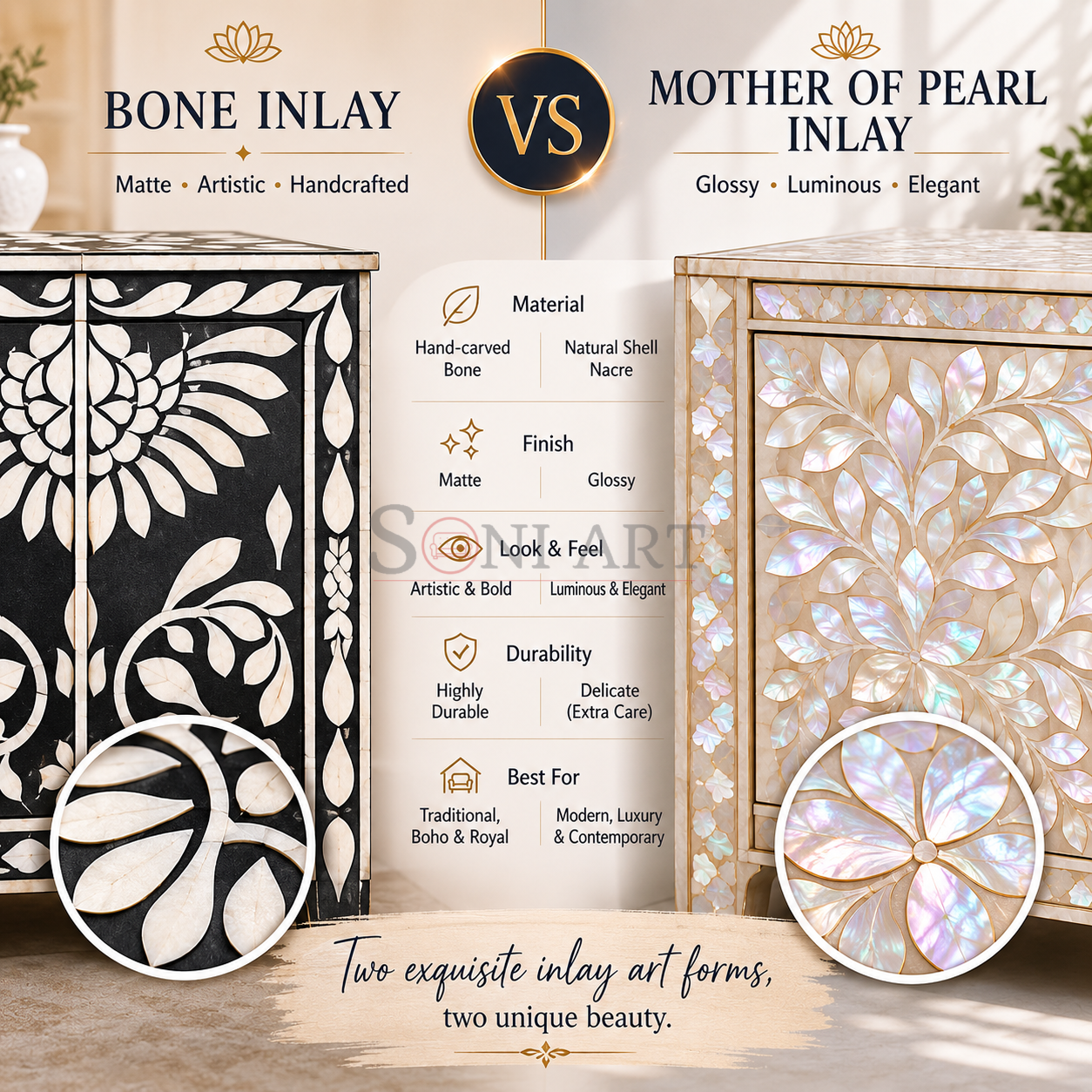
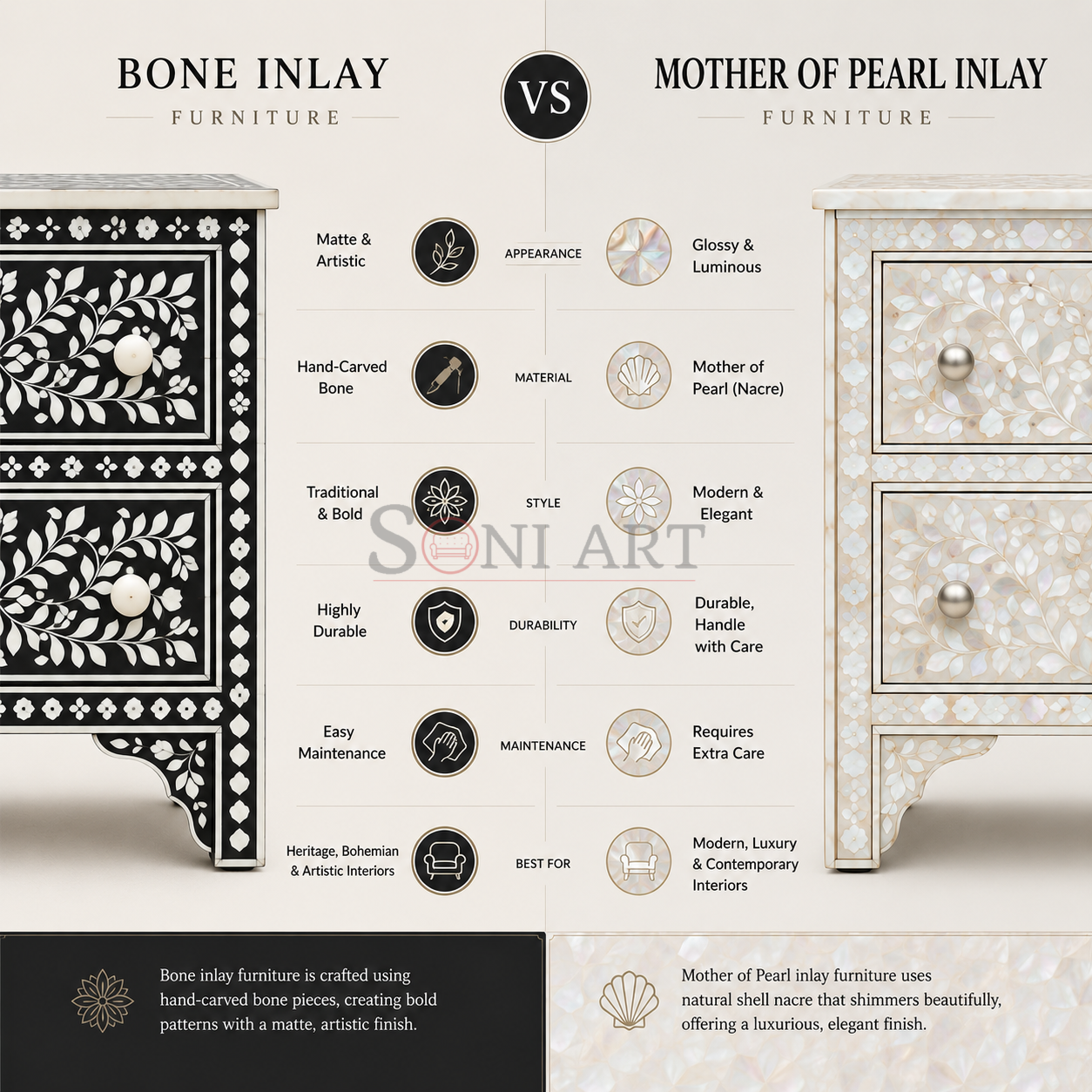
Discover the Art of Luxury Handcrafted Furniture
Luxury handcrafted furniture has become a defining element of sophisticated modern interiors. Among the most admired artisan furniture styles, Bone Inlay Furniture and Mother of Pearl Furniture stand out for their intricate craftsmanship, timeless elegance, and royal heritage.
Rooted deeply in the artisan traditions of Rajasthan, India, these handcrafted furniture styles are celebrated worldwide for transforming interiors into luxurious statement spaces. Whether used in designer homes, boutique hotels, luxury villas, or modern apartments, inlay furniture brings artistic beauty and exclusivity that machine-made furniture simply cannot replicate.
At Soni Art, we specialize in handcrafted luxury furniture that combines traditional Indian artistry with contemporary interior aesthetics. In this complete guide, discover the differences between Bone Inlay and Mother of Pearl Furniture, their craftsmanship, benefits, styling possibilities, maintenance, and how to choose the perfect inlay furniture for your home.
What is Bone Inlay Furniture?
Bone Inlay Furniture is one of the oldest and most luxurious furniture art forms originating from Rajasthan, India. Traditionally associated with royal palaces and heritage interiors, bone inlay craftsmanship involves delicately hand-carving bone pieces into floral, geometric, and intricate decorative patterns.
These individually carved pieces are carefully embedded into premium wooden furniture surfaces and filled with colored resin to create mesmerizing handcrafted designs. Every piece requires days or even weeks of meticulous artisan work, making each furniture item truly unique.
Bone inlay furniture is admired globally for its bold artistic appeal, intricate detailing, and handcrafted luxury. The slightly matte finish and decorative craftsmanship create a warm and sophisticated character ideal for timeless interiors.
Popular Bone Inlay Furniture Pieces:
- Bone Inlay Console Tables
- Bone Inlay Cabinets
- Bone Inlay Coffee Tables
- Bone Inlay Sideboards
- Bone Inlay Bedside Tables
- Bone Inlay Dressers
- Bone Inlay Dining Furniture
- Decorative Bone Inlay Mirrors
Bone inlay furniture works beautifully in:
- Luxury villas
- Heritage interiors
- Bohemian interiors
- Royal-inspired décor
- Artistic modern homes
What is Mother of Pearl Furniture?
Mother of Pearl Furniture represents refined luxury craftsmanship using nacre, the luminous inner shell layer found in oysters and mollusks. Unlike bone inlay furniture, Mother of Pearl inlay reflects light naturally, creating a shimmering and elegant visual effect.
Skilled artisans hand-cut tiny shell fragments and individually place them into intricate patterns across premium wooden furniture surfaces. Colored resin is then used to complete the handcrafted design, followed by extensive polishing to achieve a luxurious glossy finish.
Mother of Pearl furniture is often associated with contemporary luxury interiors because of its luminous appearance and sophisticated elegance. Its reflective surface enhances natural lighting and creates a premium designer aesthetic.
Popular Mother of Pearl Furniture Pieces:
- Mother of Pearl Cabinets
- Mother of Pearl Console Tables
- Mother of Pearl Sideboards
- Mother of Pearl Bedside Tables
- Mother of Pearl Accent Furniture
- Mother of Pearl Vanity Units
Mother of Pearl furniture is especially suitable for:
- Modern luxury interiors
- Contemporary apartments
- Neutral-themed interiors
- Marble-inspired spaces
- Boutique luxury projects
Bone Inlay vs Mother of Pearl Furniture – Complete Comparison
| Feature | Bone Inlay Furniture | Mother of Pearl Furniture |
|---|
| Material Used | Hand-carved bone pieces | Natural shell nacre |
| Appearance | Artistic and matte | Glossy and luminous |
| Finish | Soft handcrafted texture | Reflective polished finish |
| Style Appeal | Traditional luxury | Contemporary elegance |
| Craftsmanship | Bold decorative detailing | Fine luminous detailing |
| Durability | Highly durable | Slightly delicate |
| Maintenance | Easy to maintain | Requires careful handling |
| Visual Character | Artistic statement look | Sophisticated luxury feel |
| Popular Interior Style | Bohemian and heritage | Modern luxury interiors |
| Pricing | Premium handcrafted | Ultra-premium luxury |
Both furniture styles showcase extraordinary artisan craftsmanship and timeless luxury appeal. The ideal choice depends on your preferred interior style and design vision.
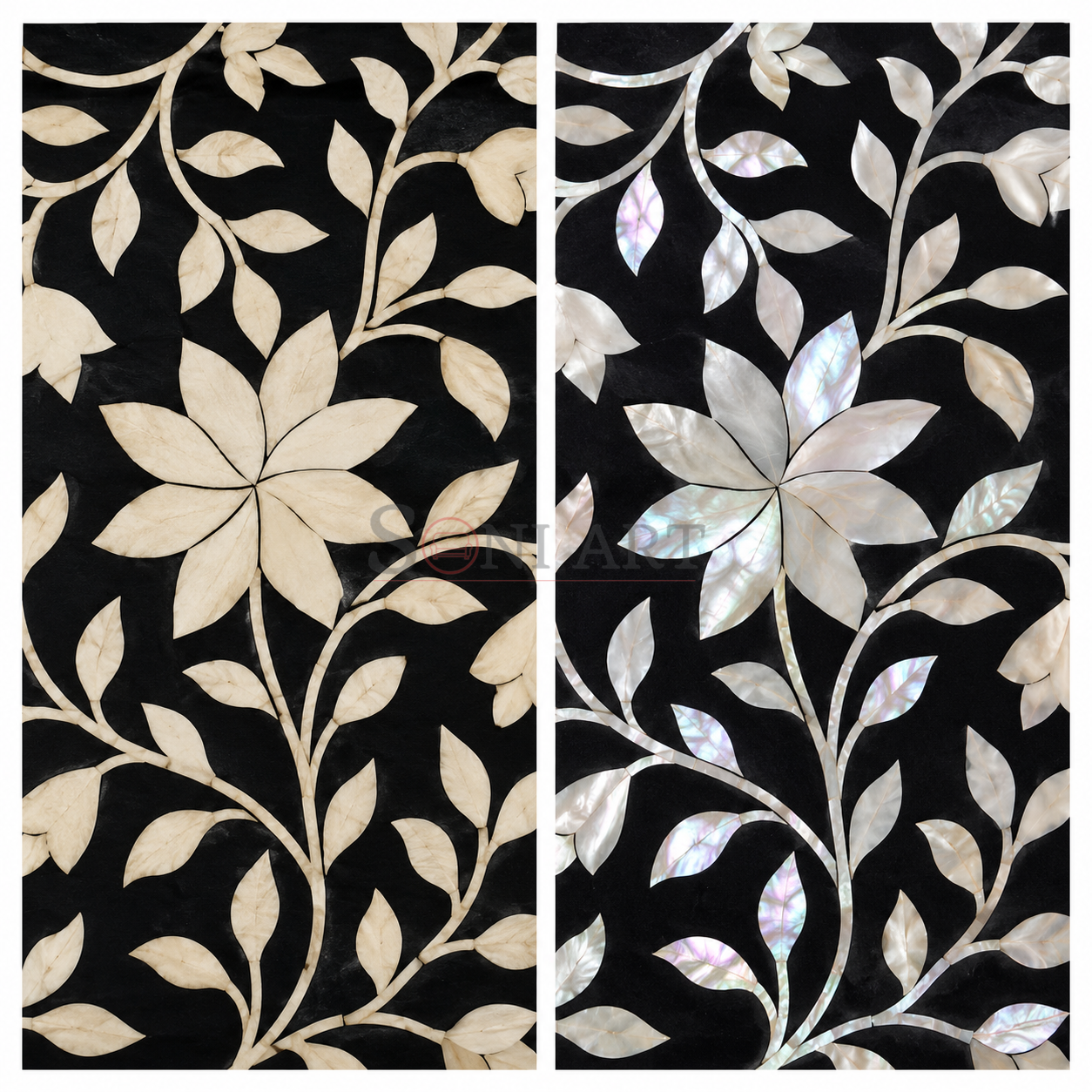
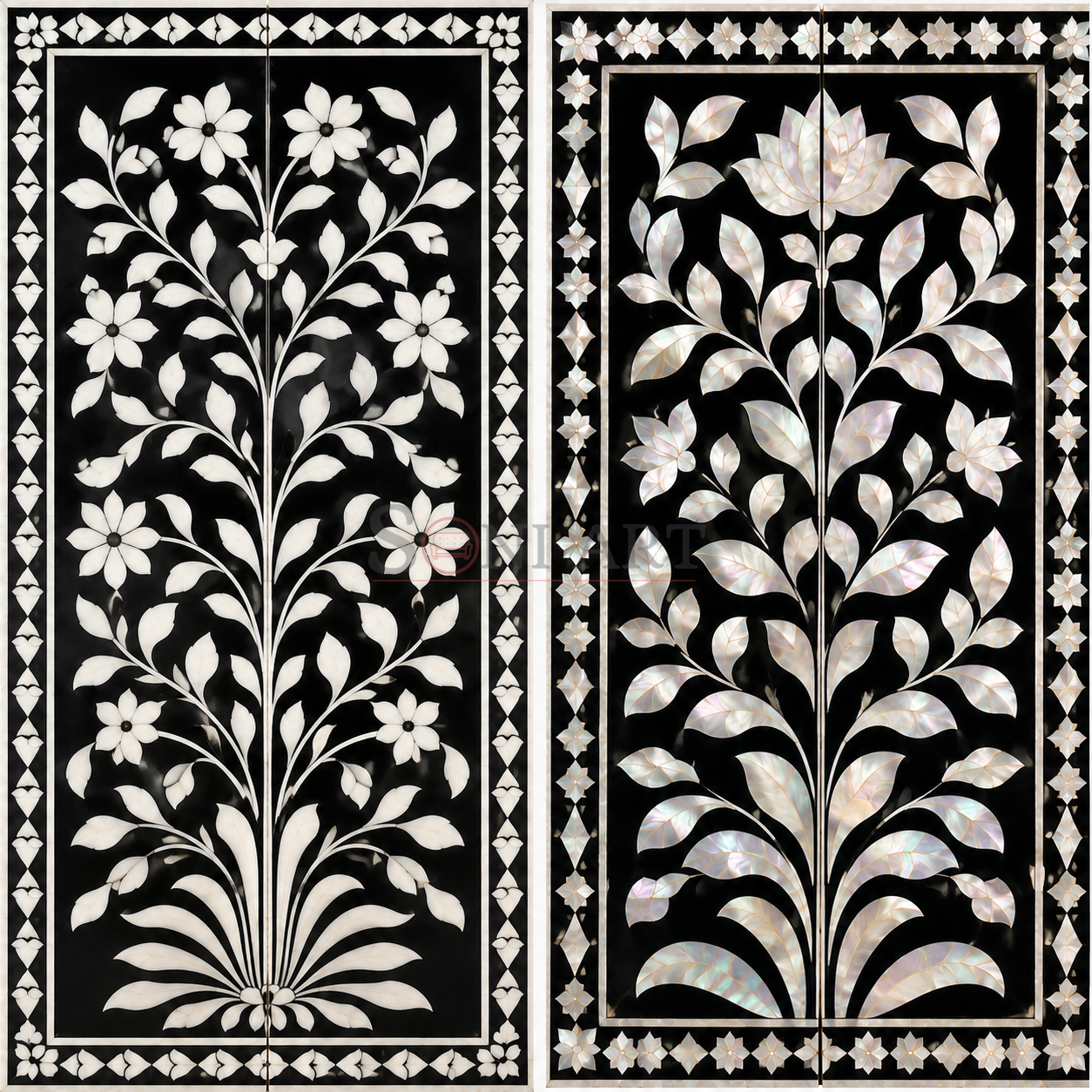
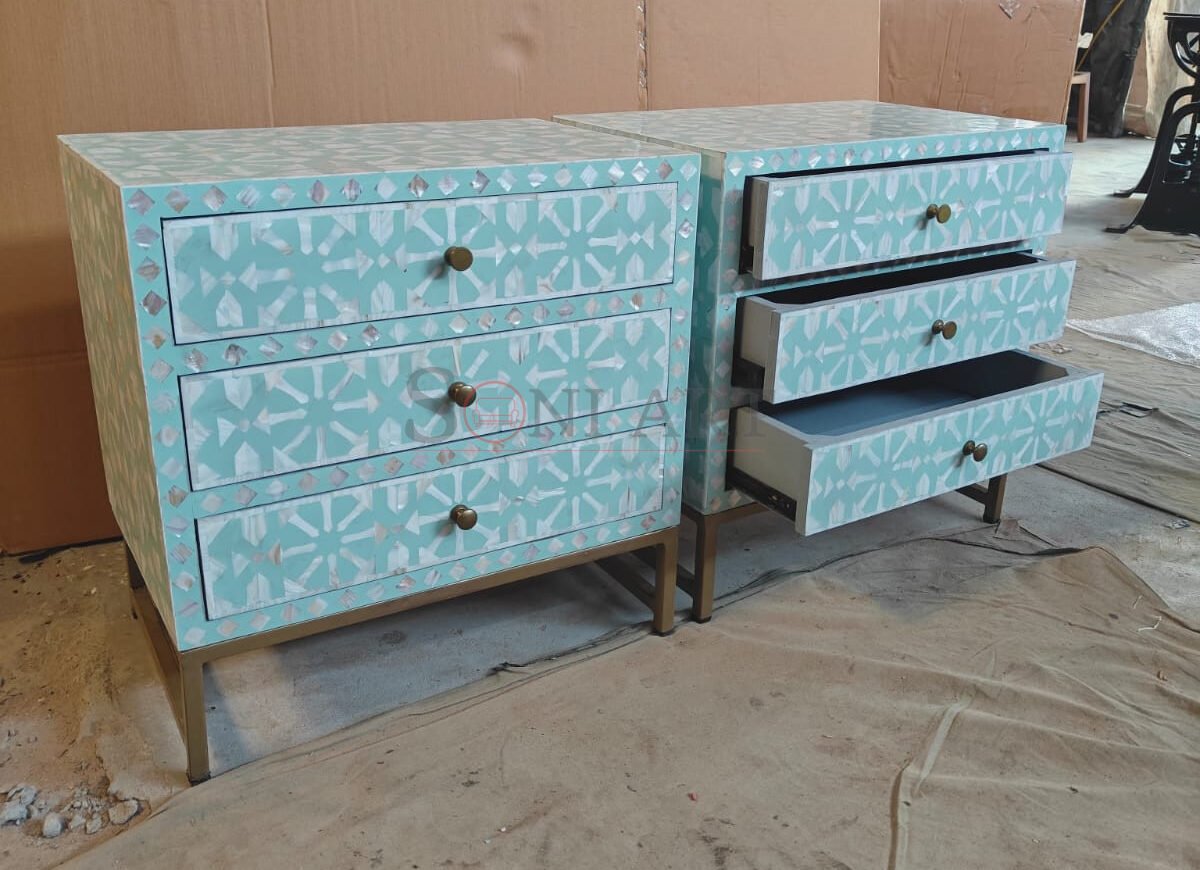
In the above images, see the comparison between Bone Inlay Furniture & Mother of Pearl Furniture. Bone Inlay Furniture is left in both the images and Mother of Pearl (MOP) Furniture is on right in both the images.
Which Inlay Furniture Style Should You Choose?
Choosing between Bone Inlay and Mother of Pearl Furniture depends on the atmosphere you want to create within your interior spaces.
Choose Bone Inlay Furniture if you prefer:
- Artistic statement furniture
- Bold handcrafted detailing
- Traditional luxury aesthetics
- Rich decorative interiors
- Timeless heritage-inspired décor
Choose Mother of Pearl Furniture if you prefer:
- Elegant contemporary luxury
- Soft luminous finishes
- Minimal luxury interiors
- Sophisticated modern styling
- Refined premium aesthetics
Many luxury interior designers also combine both styles strategically across different rooms to create layered luxury interiors with visual depth and artisanal richness.
The Handcrafted Process Behind Luxury Inlay Furniture
Every handcrafted inlay furniture piece reflects exceptional artisan dedication and precision craftsmanship.
Step 1 – Premium Wooden Frame Construction
The furniture base is carefully crafted using high-quality solid wood to ensure long-term durability and luxury finishing standards.
Step 2 – Hand-Carving Individual Inlay Pieces
Artisans individually shape delicate bone or shell fragments into floral and geometric patterns using traditional carving tools.
Step 3 – Intricate Pattern Placement
Each handcrafted piece is manually embedded into the wooden furniture surface according to the design layout.
Step 4 – Resin Filling Process
Colored resin is filled around the inlay work to create striking visual contrast and decorative depth.
Step 5 – Sanding and Surface Finishing
The furniture is repeatedly sanded and polished until it achieves a smooth, luxurious finish.
Step 6 – Final Artisan Inspection
Every piece undergoes detailed quality inspection to ensure premium craftsmanship standards.
At Soni Art, some highly intricate handcrafted furniture designs can require several weeks of artisan work depending on the complexity and detailing involved.
Why Luxury Homeowners Choose Soni Art
At Soni Art, we believe luxury furniture should reflect timeless craftsmanship, artistic excellence, and premium quality.
Why customers choose us:
- Handmade by skilled Rajasthan artisans
- Premium handcrafted luxury furniture
- Export-quality craftsmanship
- Customization options available
- Unique artisan-made designs
- High-quality finishing standards
- Luxury furniture collections for modern interiors
- Worldwide shipping support
- Timeless handcrafted elegance
Our furniture is designed for homeowners who value authenticity, craftsmanship, and sophisticated interior styling.
Care Guide for Handcrafted Inlay Furniture
Proper maintenance helps preserve the beauty and longevity of luxury handcrafted furniture.
Bone Inlay Furniture Care Tips / Tips on How to care for your Bone Inlay Furniture
- Use a soft dry cloth for cleaning
- Avoid direct sunlight exposure
- Protect from excessive moisture
- Avoid harsh chemical cleaners
- Use protective coasters
Mother of Pearl Furniture Care Tips / Tips on How to care for your Mother of Pearl Furniture
- Clean gently using microfiber cloth
- Avoid abrasive cleaning materials
- Keep away from excessive humidity
- Protect shell detailing from impact
- Maintain stable indoor conditions
With proper care, handcrafted inlay furniture can remain beautiful for decades.
5 Common Mistakes When Buying Inlay Furniture
After years of conversations with customers who bought inlay furniture from other suppliers before coming to us — sometimes with disappointing results — we have identified the mistakes that come up most consistently. Knowing them in advance will save you both money and frustration, whether you buy from us or elsewhere.
- Buying Based on Photographs Alone
Photography of inlay furniture is notoriously unreliable, particularly for mother of pearl. A MOP piece photographed in flat studio light looks nothing like the same piece in a well-lit living room. Bone inlay colours also vary significantly depending on the photography setup — the same navy resin can look almost black in some photographs and cobalt blue in others. Always request physical samples of the resin background colour, and where possible ask for a short video of the piece in natural light before committing. At Soni Art Exports, we actively encourage this before any custom order is confirmed.
- Confusing Genuine Inlay with Printed Imitations
The market is flooded with furniture that mimics the look of bone inlay or MOP using printed paper, decal transfers, or lacquered pattern finishes applied over a plain wood surface. These products are sold at very low prices and can look convincing in small photographs. The difference is immediately obvious in person: genuine inlay has a slightly tactile, three-dimensional surface even after polishing because the bone or shell pieces are physically embedded in the material; fakes are completely flat to the touch. Always verify that a supplier is a manufacturer, ask for close-up macro images of the surface, and be very cautious of price points that seem implausibly low for what is supposed to be handmade furniture.
- Ignoring the Room’s Lighting When Choosing MOP
Buyers frequently fall in love with mother of pearl furniture in a well-lit showroom or from a beautifully styled photograph, then install it in a dark corner of their home where it looks completely flat and unremarkable. Before choosing MOP, spend time assessing the natural and artificial light in the exact location where the piece will stand. Consider both daytime and evening conditions. If the lighting is poor or inconsistent, bone inlay will serve you significantly better and will look consistently beautiful in any light condition.
- Overlooking the Base Wood & Hardware Quality
Many buyers focus entirely on the inlay pattern and colour and fail to ask about the base wood quality, joinery method, and hardware. Inlay furniture is only as good as its structural foundation. A beautiful bone inlay pattern on a poorly constructed frame with inadequate drawer runners and cheap hardware will not function properly, will likely warp or crack over time, and cannot be an heirloom. When ordering, always ask specifically about the wood species, joinery technique, drawer slide quality, and hardware specification. These details determine whether a piece is genuinely furniture-grade or merely a decorative object.
- Underestimating Lead Times on Custom Orders
Handmade inlay furniture cannot be rushed without compromising quality — and no reputable manufacturer will attempt to do so. We regularly speak with clients who were quoted a two-week lead time by a competitor, received a piece clearly assembled too quickly under pressure, and are now seeking a proper replacement. Realistic lead times for custom bone inlay are four to six weeks; for mother of pearl, five to eight weeks. For large or highly complex commissions, allow longer. Plan your purchase well in advance — particularly if it is tied to a renovation completion date, a hotel opening, or a personal occasion where timing matters.
- Confusing Genuine Inlay with Printed Imitations
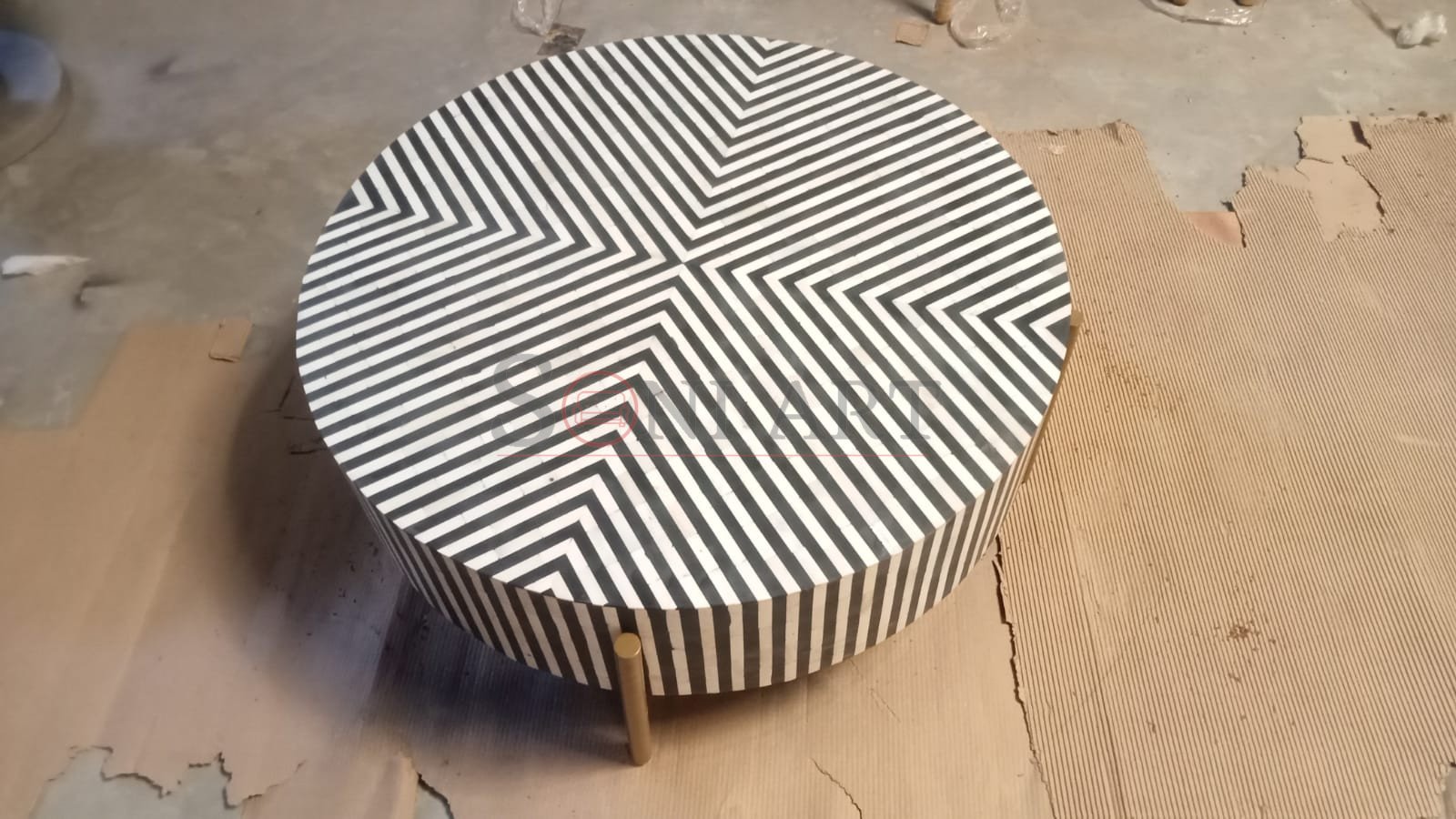
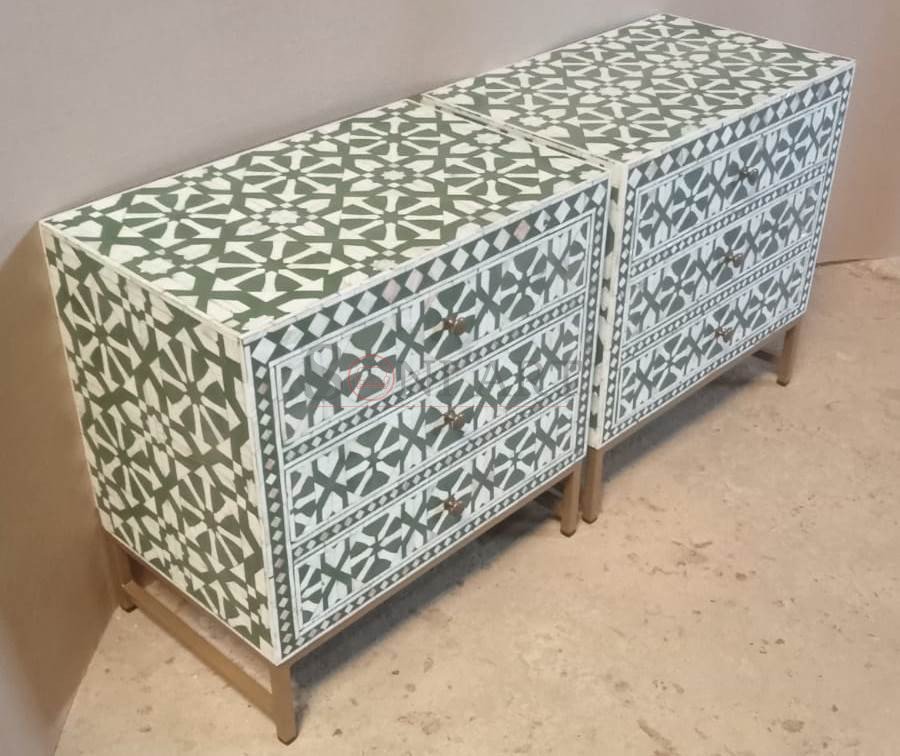
Real Bone Inlay Furniture Images
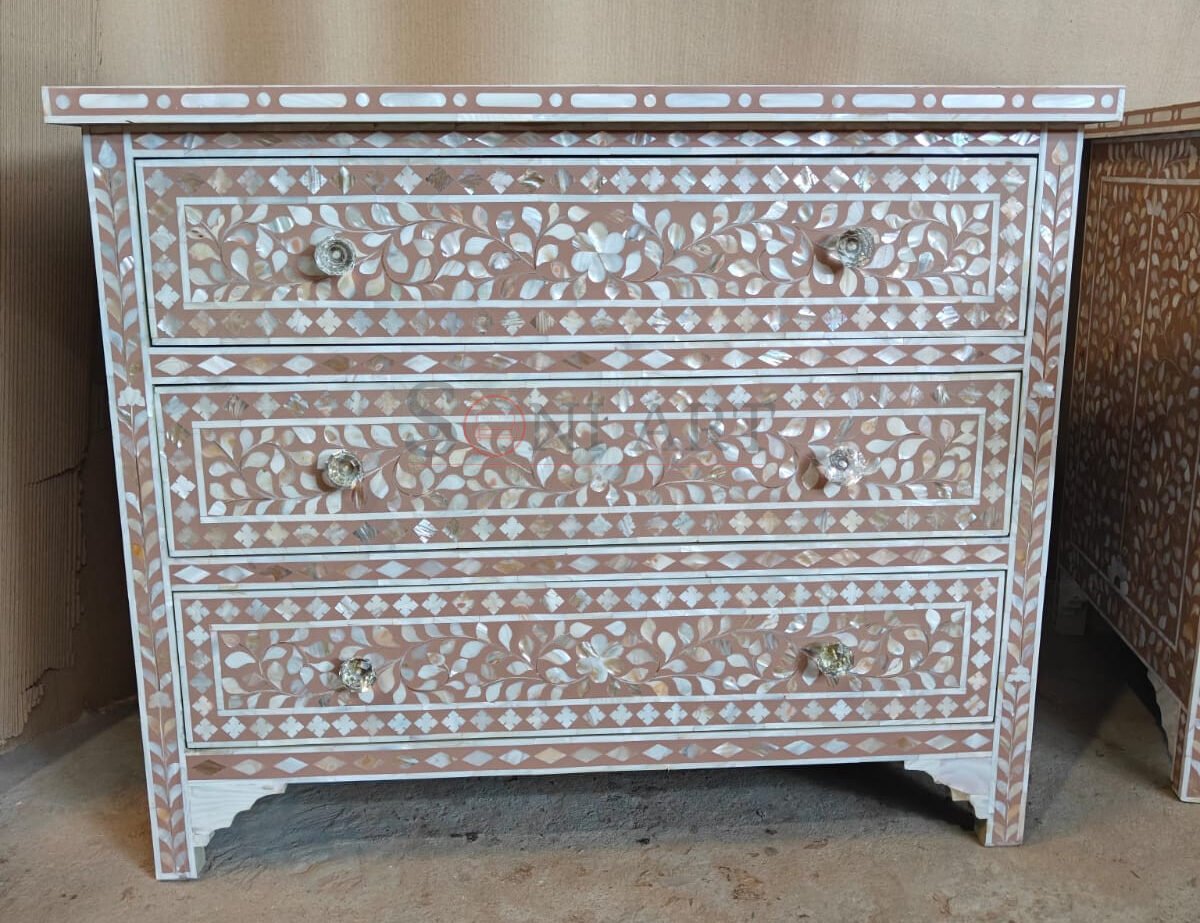
Real Mother of Pearl Images
Frequently Asked Questions
The primary difference lies in the material used and the visual result it creates. Bone inlay uses hand-carved pieces of camel or buffalo bone, which produce a matte, opaque, creamy-white appearance when set into a coloured resin background inside the wooden frame. The contrast between the ivory bone and the coloured resin creates the bold, graphic patterns that bone inlay is known for — and the colour of the piece is entirely controlled by the resin, which means virtually any background colour is possible. Mother of pearl inlay uses thin wafers of nacre — the inner shell lining of oysters and abalones — which are naturally iridescent. When light falls across a MOP surface, it produces a shifting play of blues, greens, silvers, and violets that changes constantly with the angle of light and the viewer's position. MOP is known for subtle, luminous elegance rather than bold colour. In practical terms: bone inlay is the stronger choice for colour-led interiors; MOP is the stronger choice where you want an atmosphere of refined, light-responsive luxury.
Mother of pearl inlay is consistently more expensive than bone inlay for comparable pieces, often significantly so. There are three main reasons for this difference. First, high-quality nacre shells — particularly abalone, which produces the most vibrant iridescence — are rarer and more expensive to source than camel bone, which is a widely available food industry by-product in Rajasthan. Second, the process of cutting thin shell wafers without cracking them requires a higher level of artisan skill and results in substantially higher material wastage, both of which add to production cost. Third, the finishing process for MOP is more time-consuming and technically demanding, since the shell surface must be polished very carefully to preserve the iridescent surface layer without dulling it. Bone inlay, while equally labour-intensive in terms of the volume of pieces cut and placed, uses more accessible material and has a more forgiving finishing process. The result is that bone inlay offers more affordable access to the luxury inlay category, while MOP sits firmly in the premium and investment tier.
Yes — bone inlay furniture is very durable and is well-suited to everyday use across all rooms of the house, including high-traffic areas like dining rooms, living rooms, and children's bedrooms. The surface is constructed by setting individually cut bone pieces into a pigmented resin compound within channels carved into a solid mango wood or sheesham frame. Once fully cured and sanded flush, the resulting surface is genuinely hardwearing — it will not dent, chip, or scratch under normal everyday use. The bone itself is dense and robust; the resin compound that holds it in place is similarly resilient once fully cured. The main vulnerabilities to be aware of are sustained moisture (which can affect the wood base over time), prolonged direct sunlight (which can fade the resin pigment gradually), and harsh chemical cleaners (which can dull the polished surface). All three are easily avoided with minimal care. A quality bone inlay piece, properly looked after, will look excellent for decades — and many well-maintained pieces become genuine family heirlooms.
Yes, Soni Art offers customization options in colors, patterns, sizes, and finishes.
Absolutely. Both Bone Inlay and Mother of Pearl furniture are widely used in modern luxury interiors.
With proper care, handcrafted furniture can last for decades.
Yes, and custom work is genuinely central to what we do — not a side service. Our workshop in Jodhpur produces made-to-order inlay furniture for individual clients, interior designers, architects, boutique hotels, and hospitality groups across the world. For a custom order, you can specify: the pattern design (from our existing library or a new design developed with you), the background resin colour (for bone inlay), the shell type and arrangement (for MOP), the base wood species, the furniture piece type and dimensions, the internal configuration (shelving layout, drawer depth, number of drawers or doors), the hardware finish (brass, iron, chrome, antique), and the overall surface finish (matte, satin, gloss). We provide material samples before production begins, design references for approval, and photographic updates during production. Standard lead times are four to six weeks for bone inlay and five to eight weeks for mother of pearl. For particularly large or complex commissions, we discuss timelines individually. There is no minimum order quantity — we work on single pieces as readily as large collections. Contact us through soniart.in to start the conversation.